Welcome to the Rotary Club of Western Endeavour

Do you want to make positive changes in your community and the world?  Our club members are dedicated people who share a passion for community service and friendship. Becoming a Rotarian connects you with a diverse group who share your drive to give back.
 
Contact us if you want to join us as we unite people and take action to create positive, lasting change.
My Home WA
My Home WA is the premier philanthropic organisation dedicated to providing comfortable affordable homes to women who had been living on the streets.
 
On Tuesday 27 February 2024, Michele Blakely, the architect who designed the homes and who is hands-on with each project told our club about Congdon Street homes and future My Home projects. 
Following the success of Congdon Street the WA state government decided to match future construction costs 50:50, whereas originally there had been little government interest.
 
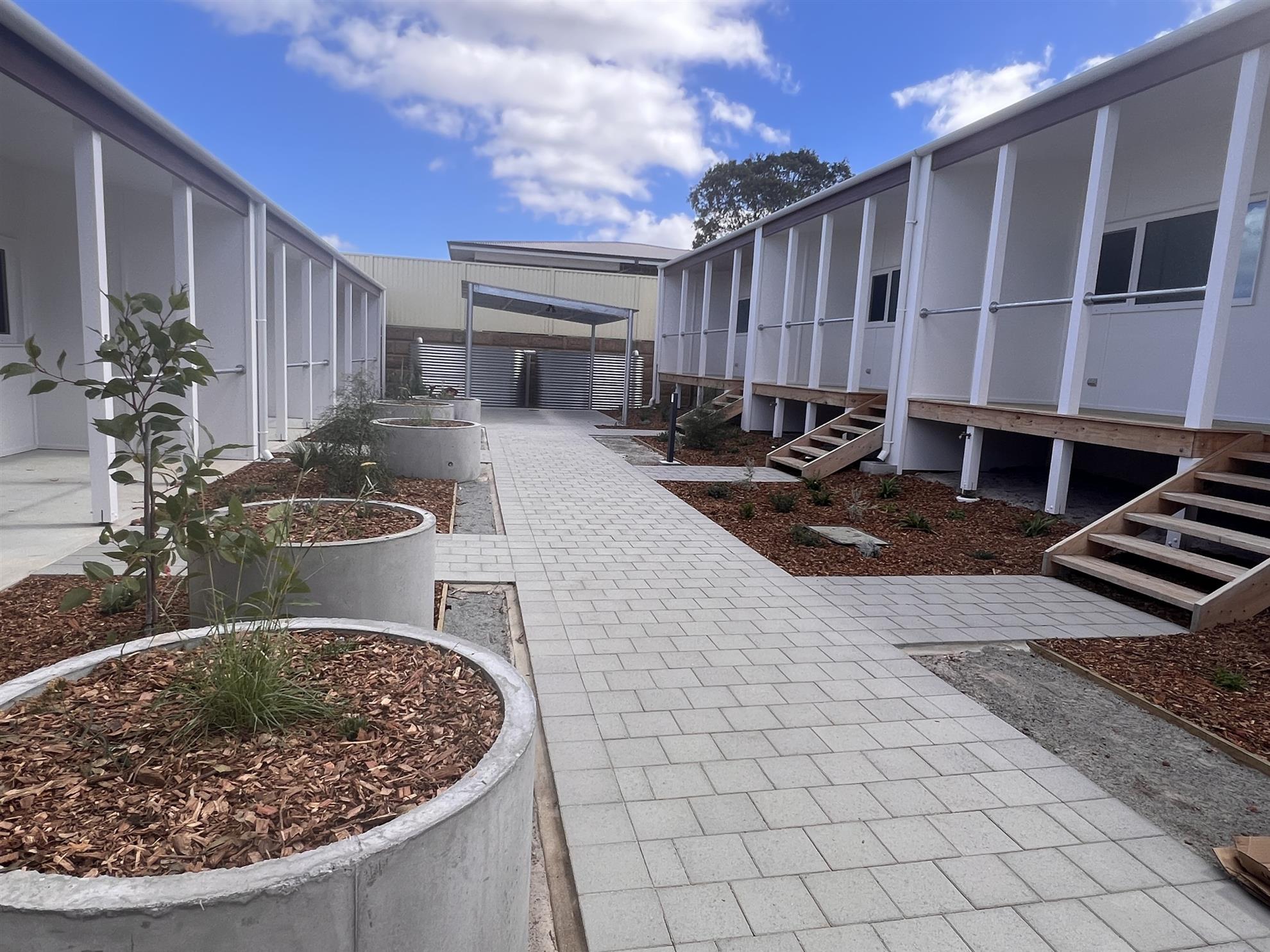
Each 31 square meter home is prefabricated and has a sustainable solar energy design. They are sited to allow constant internal temperature throughout the year. Verandas are important add-ons to the homes as recreational spaces. 
 
24 homes are planned for Bishopsgate in Victoria Park, another 20 homes in Mandurah and 12 more in Albany.
 
For all sites, land is gifted by the state and charities. Lottery West and other charities including the Bendat Family Foundation, contribute funding to construction. Services are provided by charities like St Patricks Community Support Centre in Fremantle. 
Our Rotary club donated funds towards the fit out of each Congdon Street homes. 
 
Michele was roundly applauded by those present for her contribution to My Home and our club will follow the progress of the new homes with great interest.
 
Click the button below to discover more about My Home. 
Author Marcus Harris
 
The Cancer Council WA provides two self-catering accommodation lodges in Perth, offering a welcoming home away from home for regional cancer patients and their carers while they attend treatment and cancer-related appointments in the metropolitan area.
 
Our Rotary club sponsors Room 302 at Milroy Lodge.
 
Pocket forests are popping up around the country in spaces as small as a car parking spot, a tennis court or a street verge. Ecologist Dr Grey Coupland from the Harry Perkins Institute at Murdoch University sees huge potential in the rise of 'tiny forests' and is championing their development in Perth. The pocket forests are grown using the Miyawaki method, created by Japanese botanist Akira Miyawaki in the 1970s.
 
The Miyawaki Method is an approach for creating hyper-dense patches of native vegetation on small plots of land. The method uses a four-step technique of botanical research, soil enhancement via added nutrients, planting of dense clusters of seeds, and maintenance. Proponents of the method claim that it grows up to 10 times faster than traditional plant growth and that planted areas are self-sustaining after 2-3 years. 
Melanie Peyian, the RCWE sponsored student was recently honoured by her village in Kenya.
 
Melanie is the first person in Kimuka to graduate from university and the first to become a doctor in the region. Melanie expressed her gratitude to RCWE for making this possible and is determined to help her village in the future.


After a brief overview, a tour of the facility and watching a safety video, a team of club members and their partners spent their morning packing food parcels at Foodbank last week. We worked in an assembly line putting together packs of food which will be made available for purchase by customers of Foodbank.
 
Our club also supports Foodbank by running a Cans for Christmas collection, usually at the end of November so contact us if you are interested in donating or helping out.
 

In 2007 our club was alerted to a situation in the Maasai village of Kimuka in Kenya. We were made aware that even getting clean water was not possible, so our first task was to install a rainwater tank to the school.

This engagement led us to becoming aware that many children couldn’t attend the primary school because they couldn’t afford the state required uniform or shoes. We were able to supply these and also funded an extra teacher.